





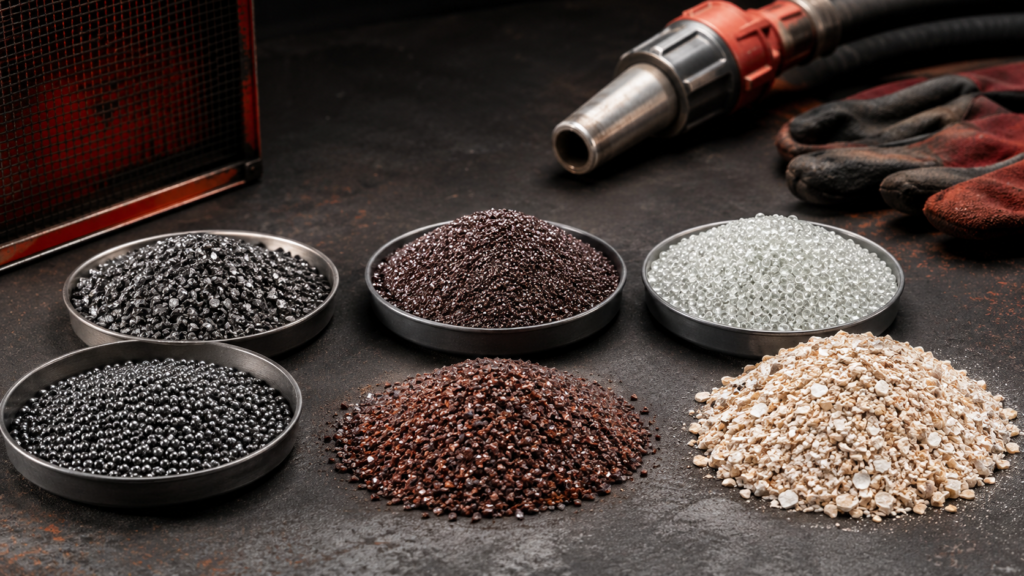
There is no single universal abrasive
The choice of abrasive depends on the type of material being processed, the coating being removed, and the desired effect. We'll use one material for intensive cleaning of steel elements, and another for more delicate processing of aluminum.
Electrocorundum – for effective cleaning
„"Electrocorundum is an abrasive based on aluminum oxide (Al₂O₃). It is a hard and aggressive abrasive. It works well for removing rust, old coatings, and preparing surfaces for further processing or painting.
Glass beads – when we want a softer surface
Glass beads are used where you want to clean a surface without aggressive profiling. They can be a good solution for machining aluminum, stainless steel, and components requiring a more aesthetic finish.
Steel shot and grit
Steel shot and grit are often used in closed-loop equipment, particularly automatic shot blasting machines. The material can be recycled back into the process multiple times after appropriate cleaning and separation.
The granulation of the abrasive also matters
Larger, more aggressive grit can remove difficult coatings faster, but it also leaves a stronger surface profile. Finer grits produce a finer finish. Grit size must also be matched to the nozzle and abrasive delivery system.
How to choose an abrasive for your sandblaster?
Before making a selection, it's important to consider the material of the workpiece, the type of coating, the desired effect, and the device's parameters. For regular use, the right abrasive selection can significantly impact process speed and operating costs.
See also our cabin sandblasters Raptor Tech